Trading P&L and billed revenue. Same number.
Eneve runs the trading book and customer billing on the same operational backbone. Trading P&L and billed revenue reconcile by design.
Portfolio positions, settlement validation, and the customer ledger all read from the same records. The audit trail is attached. Financial close stops being the moment variances appear.





The Challenge
Trading reports one number. Finance books another.
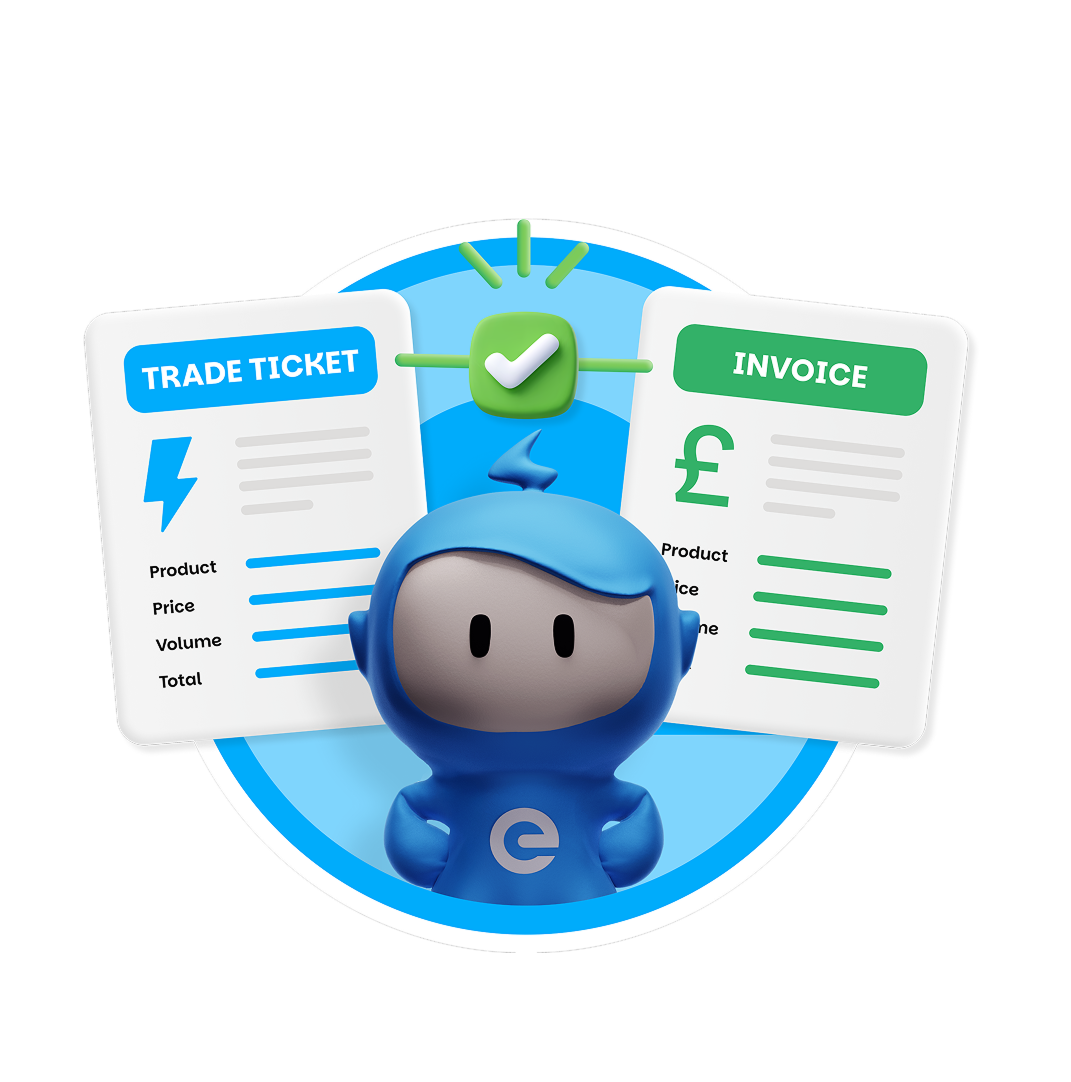
At month-end, trading reports a P&L. Billing books revenue. Finance consolidates both. Somewhere between the three, a variance appears that nobody can fully decompose.
-2.png?width=1925&height=1077&name=Untitled%20design%20(8)-2.png)
01
Front office and back office speak different languages
Trading lives in position management. Billing lives in the customer ledger. Both produce financial results, and neither references the same underlying records. The translation happens through spreadsheets and manual reconciliation.
02
Settlement variances become permanent line items
A trade settles at one number, the invoice generates from another, the settlement clearing arrives at a third. Each is defensible against its own source. None of them match. The drift becomes the result auditors flag.
03
Audit trails exist in three places, none of them complete
When an auditor asks how a financial result was constructed, the answer means assembling evidence from trading, billing, and settlement. Each system holds part of the audit trail. None of them holds the full chain.
The Eneve Answer
One backbone. One truth. One close.
Trading-to-billing reconciliation is a data architecture problem disguised as a finance problem. Different records, different answers. Every reconciliation runs through subjective judgement.
Eneve runs portfolio, settlement, billing and reporting on one backbone. Margin becomes explainable, defensible, and traceable back to the trade and the customer.
.png?width=1080&height=1080&name=Then%20(6).png)
CORE FEATURES THAT ENABLE TRADING-TO-BILLING ALIGNMENT
Eneve is built around capabilities that operate on shared data across trading and supply. These are the ones that directly enable front-to-back reconciliation, among many others.

Portfolio position management
Real-time view of portfolio exposure tied to underlying customer contracts and trading positions. Position changes update against the same records that drive billing.
.png?width=2000&height=2000&name=Untitled%20design%20(16).png)
Single customer ledger
One source-of-truth record connecting commercial activity, trading positions, billing outputs and revenue recognition. Every financial line traces back through one path, no exceptions.

Settlement validation and reconciliation
Embedded data completeness checks across allocation, nomination, imbalance and settlement. Cross-source reconciliation runs continuously, with automated follow-up when values disagree across systems.

End-to-end order-to-cash backbone
Customer contracts flow into tariff application, billing, settlement and revenue recognition along an unbroken chain. The data feeding the close is the operational data.

Drill-down audit trail
Trace any financial result back to its components: the trade, the settlement, the customer contract, the invoice line, the regulatory submission. One path back through one system, complete by design.

Cross-deparmtent reporting backbone
Reporting reads from the same operational records that run trading and billing. European regulatory submissions, financial statements and management accounts all reference one truth.
Need more?
See all products and featuresFrom three reconciliations to one truth in four steps.
Map the reconciliation gaps
We map the current path from trading position to settled revenue: the systems involved, the handoffs, the manual reconciliations, and the variance buckets that nobody fully decomposes. The work starts grounded in where the current close actually loses defensibility.
Connect trading and billing to one backbone
Portfolio position management, settlement validation, customer billing and financial reporting consolidated on one operational core. Trading outputs and billing outputs start reading from the same records.
Activate continuous reconciliation
Cross-source reconciliation, embedded data completeness checks and drill-down audit trails switched on. Variances surface operationally, with automated follow-up workflows attached, instead of waiting for the close to expose them.
Run the close on one truth
Financial close runs against pre-reconciled data. Variance investigation happens continuously inside the cycle, not retrospectively after it. Management accounts and regulatory reporting consolidate one truth, with the audit trail already structured.

Bring us the variance that closed your last quarter.
Walk us through the unexplained variance the auditors flagged or the management accounts could not fully decompose. We will show how the same period would have reconciled on Eneve, and map what a defensible close cycle looks like from one operational backbone.